
Nov 13 2024
The Israelites had just found freedom from their oppressor the Egyptians. After witnessing the seven plagues placed on the Egyptians and the parting of the Red Sea, it was clear that G-d was on their side. Through Moses, he promised the Israelites a Promised Land flowing with milk and honey. However, they had to cross the desert to walk into that promise. As the story continues, we learn that the Israelites dragged their feet to the promised land and though their descendants would enter this blessed land, the older generation would perish before this promise could be fulfilled.
The Lord has been highlighting to me that how we too walk through the desert to our Promised Land. As we grow closer to the Lord, we come to see that he has an abundance of promises over our lives. These promises however are not guaranteed, they come with a caveat.
The Israelites could not enter the Promised Land without first leaving their bondage and entering the desert. In the same way, there is a faith response that G-d calls us into as we enter our Promised Land. Faith then is an active force that drives us into obedience, hearing G-d and following where he leads. Faith is the participation, a spiritual exchange if you will, to receive what G-d has already promised.
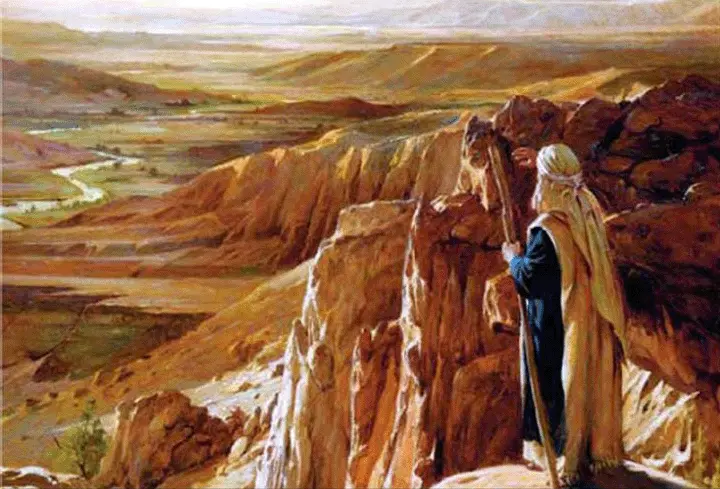
This is different from a works-based exchange, because the only work accomplished is obedience of what has been asked from us. The difficulty is in the realization of that prerogative. In the same way as the Israelites had to walk through the desert, so we too must walk through our own symbolic desert as we exit our Egyptian captivity.
Testing one another
During the travels, both G-d and the Israelites tested one another. When we compare the postures of both parties we see a stark contrast. When G-d tests the Israelites, he does it to reveal his character and promises.
The Israelites however tested G-d ten times, grumbling and complaining, each a declaration of their faithlessness is his good character.
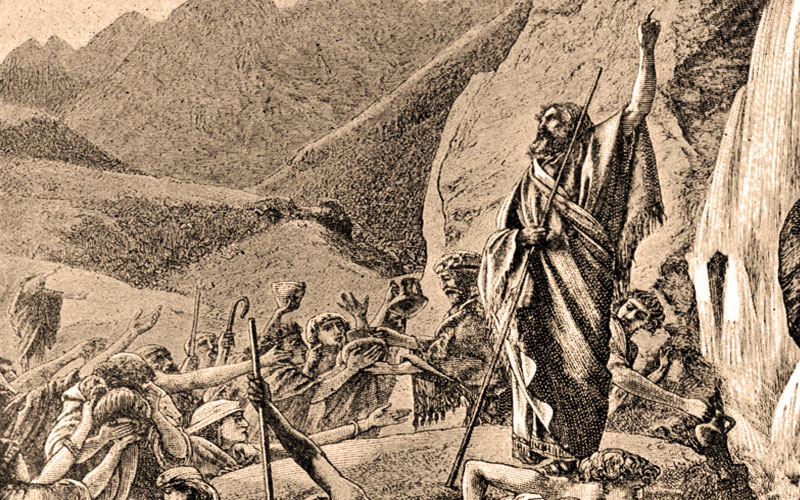
As we struggle through the desert of our lives, when we come to G-d with our frustrations, where is our heart posture? Do we believe in his word that says that we already walk in every spiritual blessing from heavenly places in Christ (Eph 1:3)? Do we come with rejoicing because we believe he surrounds us with favor as a shield (Psalms 5:13)? Or do we somehow think that we must entice G-d to bring us favor with cries and groaning?
in everything give thanks;
for this is God’s will for you in Messiah Yeshua.
The heart of the question aligns with your heart posture. Lamentation and belief in G-d’s faithfulness are not oppositional forces. However, when our grief leads us to disobedience and faithlessness, we walk in same spirit of the Israelites that G-d vehemently opposed. It was this same spirit that brought about disease and infirmity, drastically escalating the difficulty in the journey.
Rejecting the Promise
Still, even after testing G-d nine times, Out of mercy, G-d led the first generation of Israelites to the Promised Land. The Israelites, however, saw the challenge before them and lacked the faith that G-d would be with them. It takes faith to enter the desert, but we also need faith to exit into the garden. The fortunate reality is that the Ruach will dwell with us whether we dwell in the desert, garden, or forest; we simply must call upon his spirit with a contrite and humble heart. (Psalm 51:17).
However, that does not ensure we walk in the blessings that G-d has promised the faithful. We may choose to sip on spiritual milk like the Corinthians (1 Corinthians 3:2) or feast on the fullness of glory like the Ephesians (1 Ephesians). The difference is how real we want G-d to be in our lives. So long as we live a life with weak faith, we fail to walk in the power as ambassadors of the kingdom. (2 Corinthians 5:20) Conversely, as we walk in active faith and obedience, our faith grows as we see G-d fulfill his promises. This leads to an escalating faith and a ‘forestation’ of his promises and power over our life.
It is not enough to walk in spirituality, without the Lord we will never break through the way to what G-d has promised. As Jesus told his disciples “If anyone would come after me, let him deny himself and take up his cross and follow me.” (Matthew 16:24). Jesus gives us the keys to the kingdom (Matthew 16:19), when we follow Christ, we inherit the kingdom (1 Corinthians 6:9). This is truly what Jesus meant when he said, “seek first his kingdom and his righteousness, and all these things will be given to you as well.” (Matthew 6:33). Christ made this declaration after telling the people to not be anxious in anything but to have faith that G-d will provide for all our needs.
For the Israelites, after much grumbling and disobedience, G-d told Moses that no man over the age of 20 would see the promised land. Only Caleb son of Jephunneh and Joshua son of Nun (the only two spies to give a good report) would be exempt of this ordinance. It was only after this report that the Israelites readied themselves to fight, though at this point it was yet another act of disobedience. G-d had been patient with the first-generation Israelites but there was a moment after a pattern of disobedience that the blessing was turned into a curse. Even still, G-d stayed with the Israelites as they wandered the desert for another 40 years. While G-d is abundant in mercy and grace, he is not to be tested. He calls for repentance, a word that means to “turn away from.” We repent not just by words, but through the act of laying down old sin habits and walking in obedience.
Consecrating our Hearts
After the old generation of Israelites passed away, the promised land was now presented again to G-d’s chosen people. This time the Israelites walked in obedience. Their first course of action, consecration. The act of consecration means to separate from what is common to a sacred use. We are called to be both the temple of G-d (1 Corinthians 6:19-20) and as a high priest (1 Peter 2:9). What then is the sacrifice? Paul answers this in Romans12:1
The intentionality is clear, if we are to expand his kingdom on earth, we must be representative of the kingdom. When G-d walks us into the promised land, it is not for our glory, but for the glory of the father. (Psalm 115:1) It is a testament of his goodness; if it does not reflect his nature, it does not give glory to G-d. (2 Timothy 2:21).
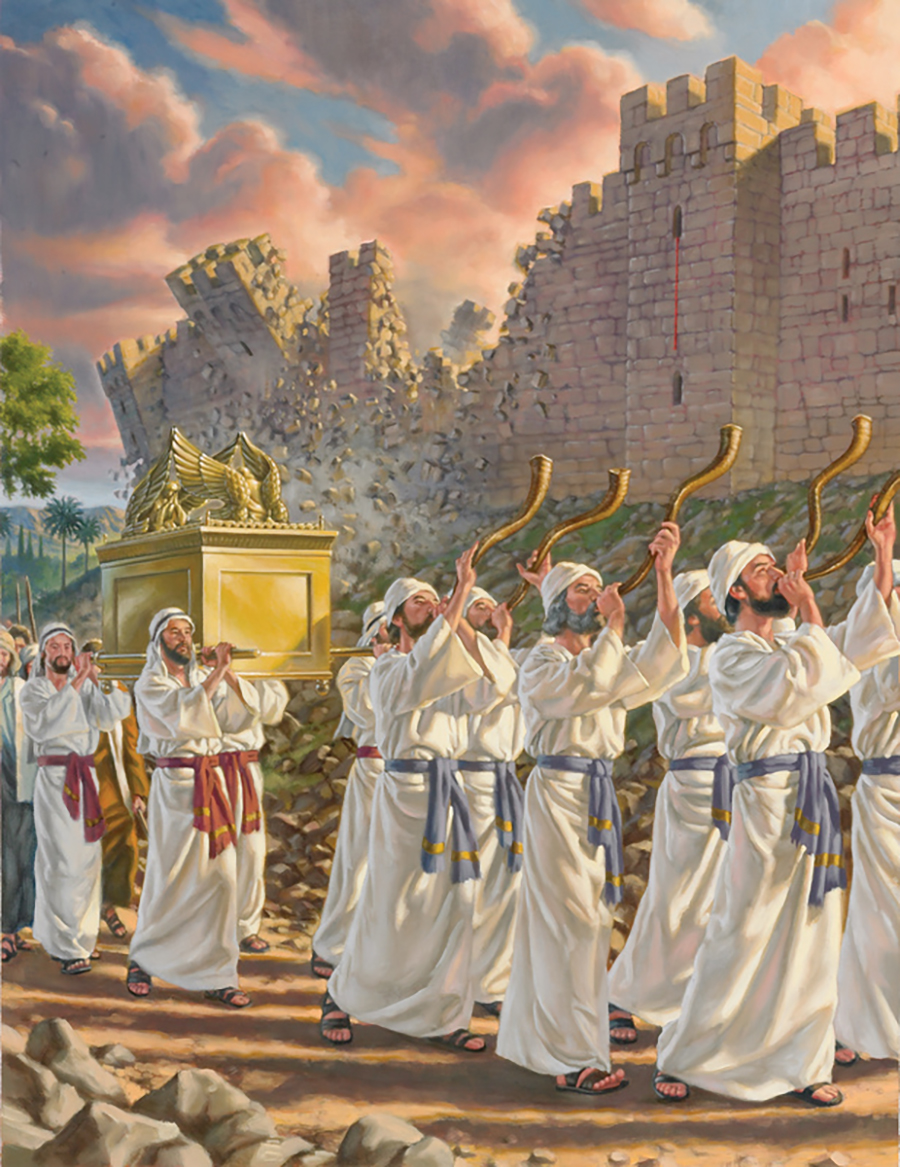
This is not to count mercy and grace dead, G-d cleanses us of our sins when we repent. Without a change of heart, there is no repentance. Repentance naturally leads to holiness. In the same way, grace is not made complete until we walk in righteousness. For we cannot walk in every spiritual blessing in heavenly places without Christ. Our full grace, our inheritance as sons and daughters, comes from sanctification. Not that we deserve the blessing that G-d provides, but he has promised us even greater things as we draw closer to him.
Keeping Watch
Unlike the Israelites, we do not want to rely on a Moses figure in our lives. We have direct access to the throne room in Christ (Ephesians 2:6-7). As we walk through the desert and await the promised land, let us walk in the hope of what G-d has prepared. It is important to stay vigilant to what G-d is saying that we can respond in earnest. (Isaiah 21:11-12). We cannot enter the promised land if we are not listening in for the command to enter. G-d wants us to seek him in all things; breakthrough does not come apart of the Lord’s lead.
A Thought on Business Growth
For the small business owner, your promised land could be perceived as a bigger business, more stable finances, a flourishing ministry, etc. What I have come to learn is that we must first give our business over to G-d. This is the first act of faith that leads us into the desert. Whatever seemingly crazy plan the Lord has for you or your business, it may not look like the traditional marketing or business development. That is what it means to exit Egyptian bondage. G-d’s strategies are not the same as the worlds.
Could it look similar…sure but G-d’s business operates on the capital of faith. The more faith you pour into the business, the higher the yield. This is not to be confused with Corporate American Christian “FaithTM”, a powerless passive belief system which neglects faithful obedience and focuses on “G-d magic” (miracles that occur because I believed hard enough). In truth, faith doesn’t require any mental stress. It is simply listening and obeying. The difficulty comes in crucifying the flesh and obeying what G-d is speaking.
Second is that obedience often has a desert period. Your business may look worse off as a resuilt of your obedience. You will still have everything you need, but there will be a time of trial. Eventually breakthrough will come, however it may not look the way you anticipated. G-d always has better plans for us then we can imagine, and often we only have a glimpse of what he is planning. It is thereby important to keep our hope up with high levels of expectancy, while surrendering our vision to the Lord. If we have given our business to the Lord, it is hence for his glory. And finally, G-d’s end goal is not to make us rich. It may be a key part of his greater plan for us, but we must not lose our vision for the greater calling. If we do, we may see a land of giants rather than a land flowing with milk and honey.